
2 min read

How Many Pumps Does a Farm Really Need?

How Many Pumps Does a Farm Really Need?
Every farm relies on water, but not every farm needs the same pumping setup. The right number of pumps depends on your water source, irrigation method, terrain, and how consistently water needs to move around the property.

Rather than thinking in terms of “how many pumps,” it’s more useful to think in terms of functions. Most farms rely on a small combination of pump types, each doing a specific job reliably.

At Allflo Pumps & Equipment, we work with agricultural operators across Australia to specify pump solutions that are practical, durable, and fit for purpose.

Below are four pump types commonly found on productive farms.


1. Centrifugal Pumps – The Workhorse

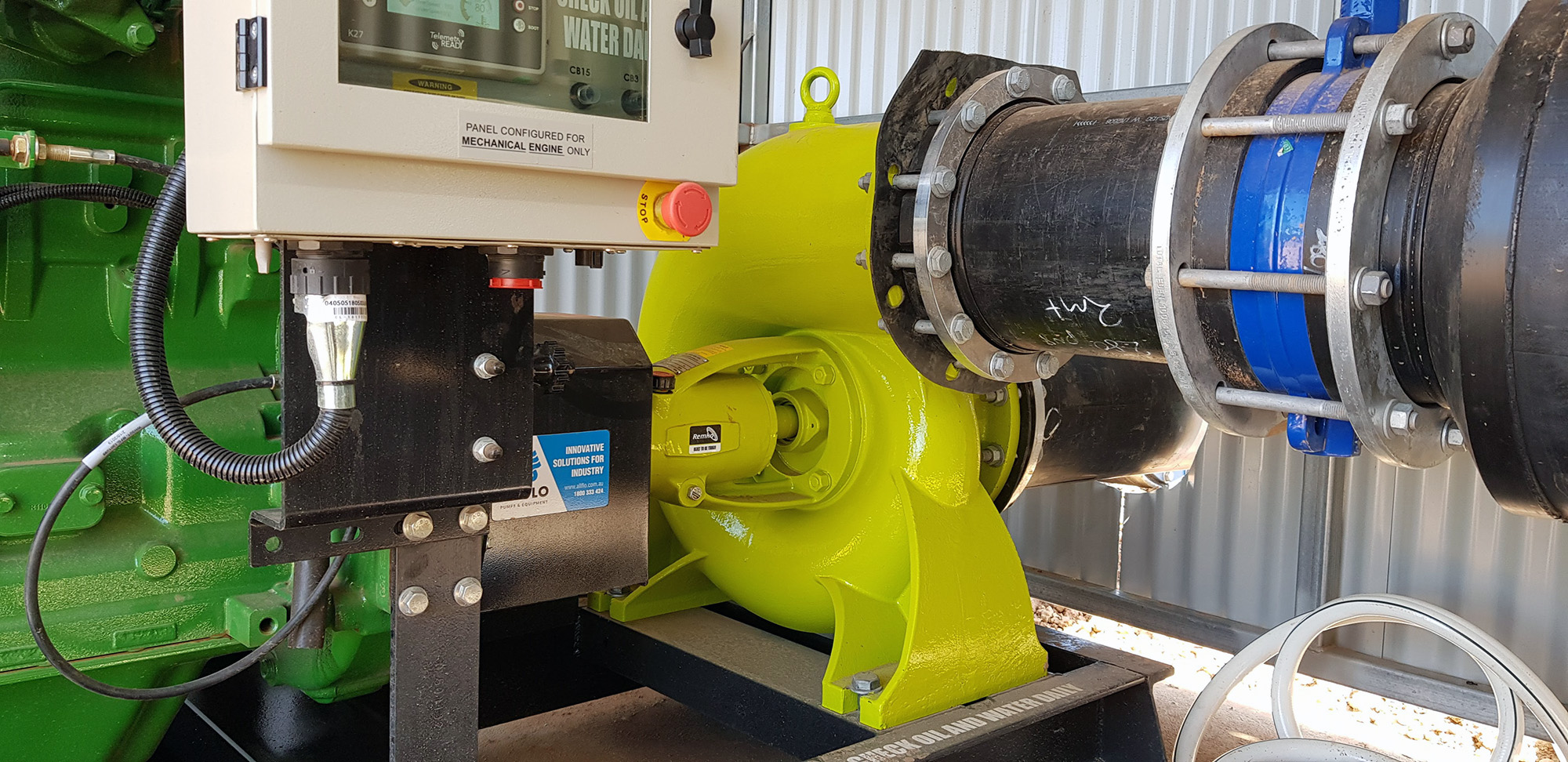
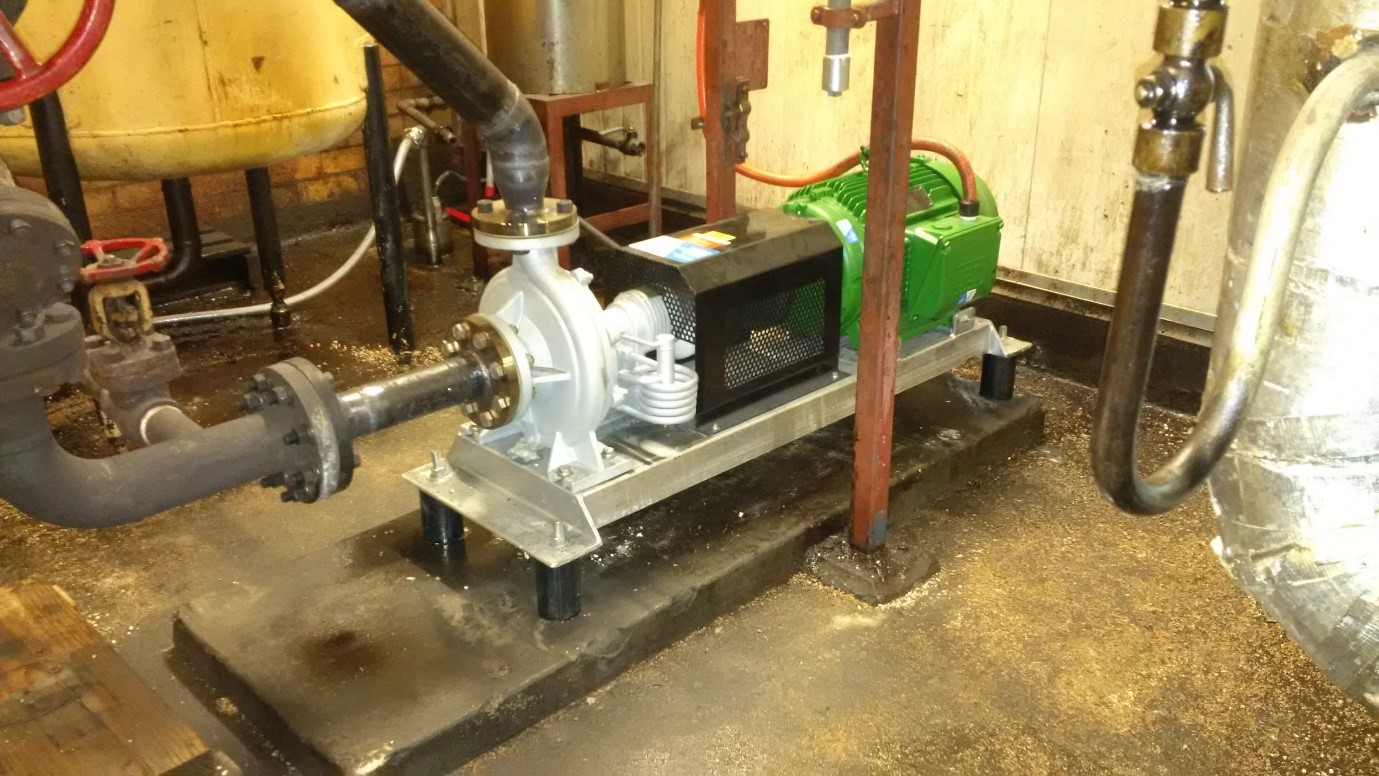
A centrifugal pump is often the primary pump on a farm. It’s commonly used to move clean or lightly contaminated water from dams, rivers, tanks, or channels into irrigation systems.

These pumps are valued for their:

  • High flow capability
  • Simple design and easy maintenance
  • Flexibility across above-ground and below-ground installations

They are available in horizontal or vertical configurations and can be specified in different materials depending on water quality and duty.


2. Submersible Pumps – For Dams, Bores, and Drainage

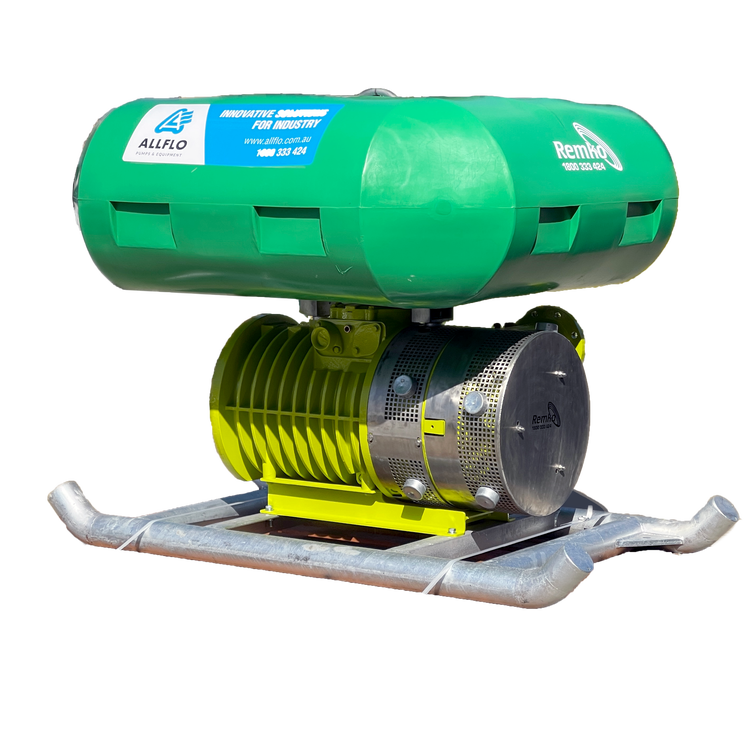
Because they push water rather than pull it, submersible pumps are efficient in deeper applications and where suction lift is a limitation.

Submersible pumps operate below the water level and are widely used in:

  • Dams and ponds
  • Drainage and dewatering
  • Sludge or wastewater handling

They are available in manual or automatic configurations and in materials suited to abrasive or corrosive environments.


3. Trash Pumps – Handling Solids and Dirty Water

Trash pumps (often self-priming) are ideal where water contains solids, debris, or organic matter.

Typical farm uses include:

  • Drainage after heavy rain

  • Trade waste and runoff

  • Dirty dam or channel water

Their ability to handle solids makes them far more reliable than standard pumps in challenging conditions.


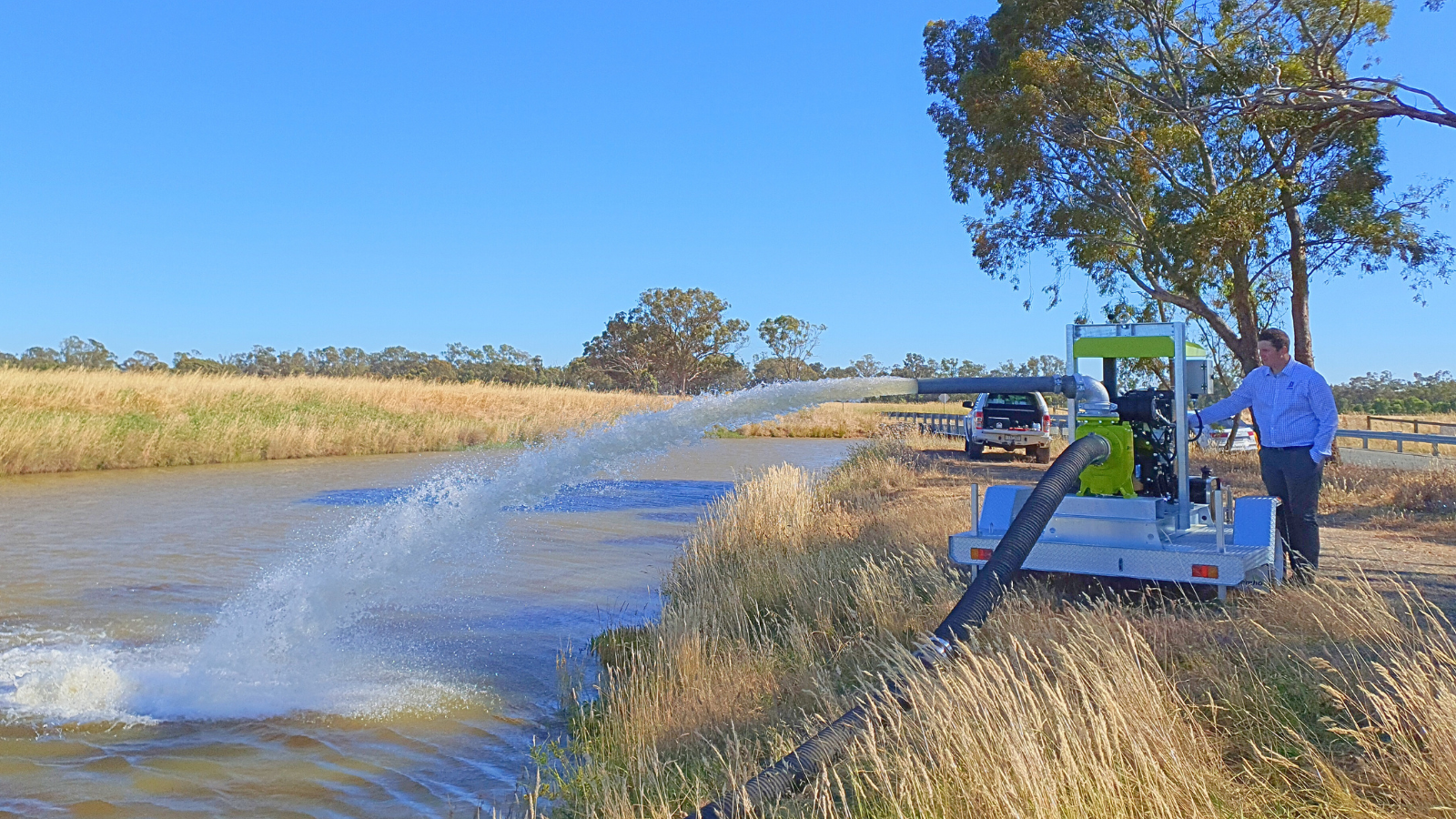
4. Irrigation Pump PackagesBuilt Around Your System

In many cases, a farm benefits most from a custom irrigation pump package rather than a single off-the-shelf pump.

These packages are designed around:

  • Required flow and pressure
  • Pipe length and elevation changes
  • Power source (diesel or electric)
  • Duty cycle and seasonal use

A correctly specified package improves efficiency, reduces running costs, and avoids premature wear.


So, How Many Pumps Do You Need?

Most farms operate efficiently with two to four pumps, each performing a distinct role. The key is not quantity, but selecting pumps that suit your water source, usage pattern, and long-term operating conditions.

Allflo works with farms across Australia in irrigation, trade waste and water transfer applications.

If you’re planning an upgrade or unsure whether your current setup is working as efficiently as it should, a proper assessment can save time, money and frustration.

Talk to a Pump Expert Today

When Is A Submersible Pump Necessary?

1 min read

When Is A Submersible Pump Necessary?

Submersible pumps are widely used across commercial, industrial, rural, and municipal applications. They are commonly selected for handling...

Read More
How to calculate the flow rate of your pump

2 min read

How to calculate the flow rate of your pump

Whether you’re assessing an existing industrial pump system or planning a new installation, flow rate is one of the most important performance...

Read More
Comprehensive Guide to Handling High-Temperature Liquids with Pumps

Comprehensive Guide to Handling High-Temperature Liquids with Pumps

Pumps that handle high-temperature liquids are used across almost every industrial sector. Understanding how elevated temperatures affect pump...

Read More